Vibrobed

Scientific research

Vibroacoustic therapy (VAT) is a therapeutic approach that emerged in the 1980s and combines low-frequency sound vibrations in the range of 30-120 Hz with listening to music. The effectiveness of VAT has been established primarily on the basis of empirical experience and research studies with a small number of participants. Some studies have demonstrated the effect of VAT in people with various types of health problems, such as pain, cerebral palsy, Parkinson's disease, and others. Unfortunately, there are not enough research studies on VAT and its effects on the autonomic nervous system and stress, which are one of the main subjects of our research. This knowledge gap was the reason for conducting pilot studies and a large-scale randomised controlled study focused on stress (Vilímek et al., 2019-2025). The aim of our research is to focus attention on evidence-based practice and the application of knowledge in practice.

Vibrobed

Vibration of the organs, tissues and cells

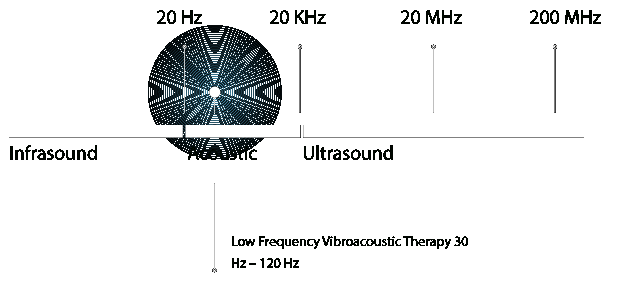
Graf frekvencí


The aim of the pilot studies (Vilímek, Chráska, 2019; Vilímek, Kantor, Chráska, 2019; Vilímek, Kořínková, Kantor, 2021; Vilímek, Kantor, Krejčí et al., 2022; Kantor, Vilímek, Vítězník et al., 2022; Vilímek, Uhrinová, Bucharová et al. 2023) and long-term research as part of a doctoral thesis (Vilímek, 2025) was to investigate the effects of vibroacoustic therapy on stress in the general population through a randomized controlled study.

We focused on physiological functions (autonomic nervous system, skin conductance, hormonal regulation) and subjective perception (standardized PPS-10 questionnaires and VAS scales for stress, muscle tension and fatigue) in connection with acute perception of stress. We also focused on the application of the acquired findings through case studies in the areas of special education – cerebral palsy, mental disability, ADHD, Autism (Vilímek, 2025). 

The effects were measured using the spectral analysis method of heart rate variability in a pre-test/post-test format. Statistically significant effects of vibroacoustic therapy on the ANS, specifically on its parasympathetic part and on the individual's overall spectral performance, have been demonstrated.

Thanks to using the Vibrobed, it is possible to achieve overall relaxation of the body, support its regeneration and the ability to cope more easily with acute stress. Results in the area of subjective perception indicate the potential of the intervention to positively influence bodily sensations, emotional experiences, mental processes and subjective well-being.


"The results of the RCT study provide scientific evidence on the basis of which vibroacoustic therapy may be considered an intervention supporting autonomous regulation and subjective perception, which is characterized by the deepening of bodily perception and positive emotions."

(Vilímek, 2025)


Overview of research studies in which I participated as an author and co-author during my doctoral studies at Palacký University in Olomouc (Vilímek, 2018-2025).

  • Kantor, J., Vilímek, Z., Vítězník, M., Smrčka, P., Campbel, E. A., Bucharová, M., Grohmannová, J., Špinarová, G., Janíčková, K., Du, J., Li, J., Janátová, M., Regec, V., Krahulcová, K., a Kantorová, L. (2022). Effect of low frequency sound vibration on acute stress response in university students – Pilot randomized controlled trial. Frontiers in Psychology, 13. https://doi.org/10.3389/fpsyg.2022.980756
  • Kantor, J., Kantorová, L., Marečková, J., Peng, D., & Vilímek, Z. (2019). Potential of vibroacoustic therapy in persons with cerebral palsy: an advanced narrative review. International journal of environmental research and public health, 16(20), 3940.
  • Vilímek, Z., Kantor, J., Krejčí, J., Janečka, Z., Jedličková, Z., Nekardová, A., Botek, M., Bucharová, M., a Campbell, E. A. (2022). The effect of low frequency sound on heart rate variability and subjective perception: A randomized crossover study. Healthcare, 10, 1024. https://doi.org/10.3390/healthcare10061024
  • Vilímek, Z., Uhrinová, Z., Bucharová, M., Kantor, J., a Krejčí, J. (2023). Wirkung der vibroakustischen Therapie auf Spastik und Herzfrequenzvariabilität bei zwei jungen Erwachsenen mit Zerebralparese. časopis REHABILITÁCIA, 60(3), 1-15. https://doi.org/10.61983/lcrh.v60i3.11 
  • Vilímek, Z., Kořínková, J., a Kantor, J. (2021). The impact of vibroacoustic therapy on subjective perception of university students – Mixed design pilot study. Universal Journal of Educational Research, 9(7), 1409–1420. https://doi.org/10.13189/ujer.2021.090707
  • Vilímek, Z., a Chráska, M. (2019). Vliv vibroakustické stimulace na subjektivní vnímání. In Tělo a mysl. Sborník odborných příspěvků (s. 340–349). Olomouc: Univerzita Palackého v Olomouci.
  • Vilímek, Z., Kantor, J., a Chráska, M. (2019). Vliv vibroakustické stimulace na autonomní nervový systém. In Tělo a mysl. Sborník odborných příspěvků (s. 332–339). Olomouc: Univerzita Palackého v Olomouci.


As a research initiator, co-author of the research design and expert consultant, I participated in the implementation of all the qualifying bachelor's and master's theses mentioned below focused on vibroacoustic therapy (Palacký University in Olomouc, the Czech Republic):

  • Jedličková, Z. (2021). Vliv vibroakustické terapie s konstantní amplitudou na autonomní nervový systém (Bakalářská práce). Univerzita Palackého v Olomouci, Fakulta tělesné kultury.
  • Kroupová, J. (2021). Vibroakustická terapie jako prostředek ke snižování stresu u vysokoškolských studentů se specifickými potřebami (Bakalářská práce). Univerzita Palackého v Olomouci, Pedagogická fakulta.
  • Karasová, K. (2020). Vibroakustická terapie a bolest v kontextu speciálněpedagogické intervence (Bakalářská práce). Univerzita Palackého v Olomouci, Pedagogická fakulta.
  • Martináková, K. (2020). Vibroakustická terapia ako metóda špeciálne-pedagogickej intervencie (Bakalářská práce). Univerzita Palackého v Olomouci, Pedagogická fakulta.
  • Nekardová, A. (2020). Vibroakustická stimulace jako metoda speciálněpedagogické intervence (Bakalářská práce). Univerzita Palackého v Olomouci, Pedagogická fakulta.
  • Smolíková, M. (2020). Vibroakustická terapie jako prostředek ke snižování stresu u studentů (Bakalářská práce). Univerzita Palackého v Olomouci, Pedagogická fakulta.
  • Uhrinová, Z. (2022). Účinek vibroakustické terapie u žáků s vícečetným postižením (Diplomová práce). Univerzita Palackého v Olomouci, Pedagogická fakulta.
  • Vítková, V. (2020). Vliv nízkých frekvencí vibroakustické terapie na svalové napětí a stres člověka (Diplomová práce). Univerzita Palackého v Olomouci, Fakulta tělesné kultury.


I acknowledge a potential intellectual conflict of interest which may arise from my authorship of the design and development of the VIBROBED vibroacoustic unit, which was used in all the above research studies. All studies were conducted on the basis of informed consent, entry questionnaires, planned research design, cooperation with expert teams and the research was approved by the Ethics Committee of the Faculty of Education, Palacký University in Olomouc, the Czech Republic.


BRIEF THEORY OF VIBROACOUSTIC THERAPY


Below you may find an excerpt of a brief vibroacoustic therapy theory from the doctoral thesis (Vilímek, 2025), which focused on "THE IMPACT OF VIBROACOUSTIC THERAPY IN THE EDUCATIONAL ENVIRONMENT WITH A FOCUS ON STRESS AND THE SPECIAL NEEDS OF PEOPLE WITH MULTIPLE DISABILITIES".


Definition of vibroacoustic therapy

Vibroacoustic therapy was created based on scientific findings from physiology, neurology, psychology, acoustics and many other fields. Its development is closely linked to research into the effects of sound and vibrations on the human body and their use in therapeutic practice.

Due to its interdisciplinary nature, vibroacoustic therapy may be classified from the perspective of music therapy as well as vibration therapies, which fall into the field of medical rehabilitation. Vibroacoustic therapy has its roots in music therapy. Many prominent figures in vibroacoustic therapy were also music therapists and most of them used music listening as part of vibroacoustic therapy. Therefore, there have been discussions about whether vibroacoustic therapy represents a music therapy approach (Hooper, 2001). There has still been no consensus on this matter - vibroacoustic therapy is usually considered a rehabilitation method in contrast with music therapy, however, in some countries, such as Finland, vibroacoustic therapy is classified as a music therapy approach. 

From a music therapy perspective, vibroacoustic therapy is classified in the overview of receptive music therapy techniques by Bruscia (1998). He introduced, among other things, the concept of somatic listening, which defines listening using sounds (vibrations in low-frequency sound) and music with the aim of influencing the user's bodily perception. Types of somatic listening include:

  • synchronisation – synchrony between vibrations, sounds or music in the client's bodily reactions,
  • resonance (tonation) – vibrating parts of the client's body using vibrations, sounds or music, 
  • music biofeedback – auditory feedback for autonomic body functions,
  • vibroacoustic music – the bodily perception of vibratory (low-frequency) sounds when listening to sounds or music (Bruscia, 1998).


Vibroacoustic therapy also has close connections with medical rehabilitation and physiotherapy, where various forms of mechanical vibrations (e.g. as part of the Whole Body Vibration approach or local vibration therapies) have long been used to treat pain, relax muscles and promote blood circulation (Boyd-Brewer and McCaffrey, 2004; Brabant et al., 2017).


From this perspective, vibroacoustic therapy is classified as a vibration therapy using mechanical or sound vibrations to influence the nervous, muscular, and vascular systems (Boyd-Brewer and McCaffrey, 2004; Rüütel, 2002). Vibroacoustic therapy may be classified as part of a broader spectrum of vibration therapies which include:

A) Mechanically induced vibration therapies
  • Whole Body Vibration (WBV) – a method using mechanical oscillations of the whole body to improve muscle tone, balance, functional performance and stimulate the circulatory system. WBV is also aimed at supporting gross motor skills, for example, in the case of patients with cerebral palsy and after a stroke. It is a neuromuscular exercise which uses oscillatory movement around a balance point to improve neuromuscular performance and balance (Saquetto et al., 2015). 
  • Local mechanical vibrations – are applied to specific parts of the body and are commonly used for pain relief, muscle regeneration and lymphatic system stimulation (Boyd-Brewer, 2003).
B) Sound-induced vibration therapy
  • Vibroacoustic therapy (Vibroacoustic Therapy, VAT) – in the original concept of Olav Skille (Skille, 1989). Other terms corresponding to the current concept of Vibroacoustic Therapy include: (Vibroacoustic Treatment) (Skille, 1991), Rhythmic Sensory Stimulation (RSS), (Bartel a Mosabbir, 2021) Vibrotactile Intervention (Walters, 1996; Janzen, 2019); psychoauditory method (PAM) (Ahonen-Eerikainen, 1996) physioacoustic therapy (Physioacoustic Therapy, PAT) (Lehikoinen, 1998).


The concept and definition of vibroacoustic therapy
Vibroacoustic therapy is defined by its founder Skille as "the use of sinusoidal, low-frequency sound waves in the range of 30-120 Hz, which are combined with music and intended for therapeutic purposes" (Wigram, 1996, p. 36). Vibroacoustic therapy is defined similarly by Lehikoinen (1998). Punkanen and Ala-Ruona (2012) state that vibroacoustic therapy purposefully uses a combination of low-frequency sound (sound vibrations) and listening to music in combination with therapeutic intervention. However, low-frequency vibrations without the accompaniment of music are also used in vibroacoustic therapy practice (Campbell et al., 2019).


Vibroacoustic equipment, application conditions and principles 


Technical equipment, including technical parameters is important for the implementation of vibroacoustic therapy. This is contained in the first part of this subchapter. The second part of this subchapter deals with the application conditions of vibroacoustic therapy. The outcome of vibroacoustic therapy on physiological and psychological processes is influenced by many factors, including the type of device used, the choice of frequency or music, the application methodology, and the context of the indication, i.e. whether vibroacoustic therapy is applied preventively or therapeutically (Boyd-Brewer, 2004). The application conditions also include the safety and contraindications of vibroacoustic therapy.


Vibroacoustic equipment 

Vibroacoustic units from the 1980s and 1990s were relatively simple from a technological point of view – e.g. bass speakers placed in pillows, resonant chairs or under various beds, later integrated into the resonant parts of the device. Technologies enabling the transmission of low-frequency sound have developed faster than scientific research, yet the first clinical studies showed promising results (Punkanen and Ala-Ruona, 2012). Sinusoidal sound does not contain higher harmonic tones, and its controlled application was only made possible thanks to the development of modern technology – e.g. low-frequency generators and amplifiers. Types of vibroacoustic therapy devices include vibroacoustic tables, beds and special therapy chairs designed to optimally transmit vibrations to the patient's body (Wigram and Dileo, 1997). Vibroacoustic therapy utilized various types of equipment which allow the transmission of low-frequency sound vibrations into the client's body. The most commonly used devices include (Punkanen and Ala-Ruona, 2012):

  • Multivib (Norway) – vibroacoustic mattresses and pillows designed for whole body therapy. 
  • Nextwave (Finland) – physioacoustic chairs enabling targeted stimulation of various parts of the body using low-frequency sound.  
  • Somatron (USA) – multipurpose vibroacoustic devices used not only in therapy, but also in relaxation programs and wellness centres.


Application conditions of vibroacoustic therapy

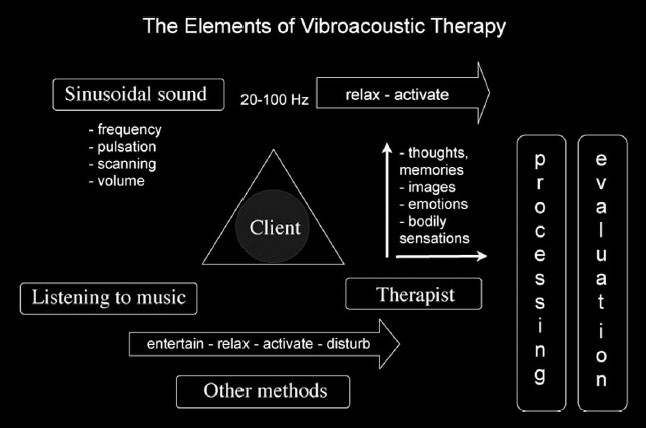
Punkanen and Ala-Ruona (2012) define the following basic elements of vibroacoustic therapy, the interaction of which leads to the realization of vibroacoustic therapy as a treatment process (Figure 1):

  • Low-frequency sound vibrations and their characteristics (e.g. pulsation length, volume, etc.) determining therapeutic efficacy. 
  • Music – relaxation or activation functions. In the case of a disturbing effect on the client, only low-frequency sound without music may be used.  
  • Therapistcreates conditions for the implementation of vibroacoustic therapy, e.g. safety, confidential relationship, provides information, controls vibroacoustic therapy equipment, acquires feedback from clients, reflects needs and therapeutic goals, etc. (Punkanen, and Ala-Ruona, 2012).


Elements of vibroacoustic therapy (adapted from Punkanen, and Ala-Ruona, 2012)


The complexity of the tasks the therapist performs during therapy sometimes leads to a distinction between vibroacoustic therapy, i.e. the application of low-frequency sound itself (possibly accompanied by music) and a more complex concept of treatment (vibroacoustic treatment), which, according to the scheme by Punkanen and Ala-Ruona (2012), includes a number of other therapeutic processes, e.g. verbal reflection or verbal psychotherapy combined with vibroacoustic therapy.


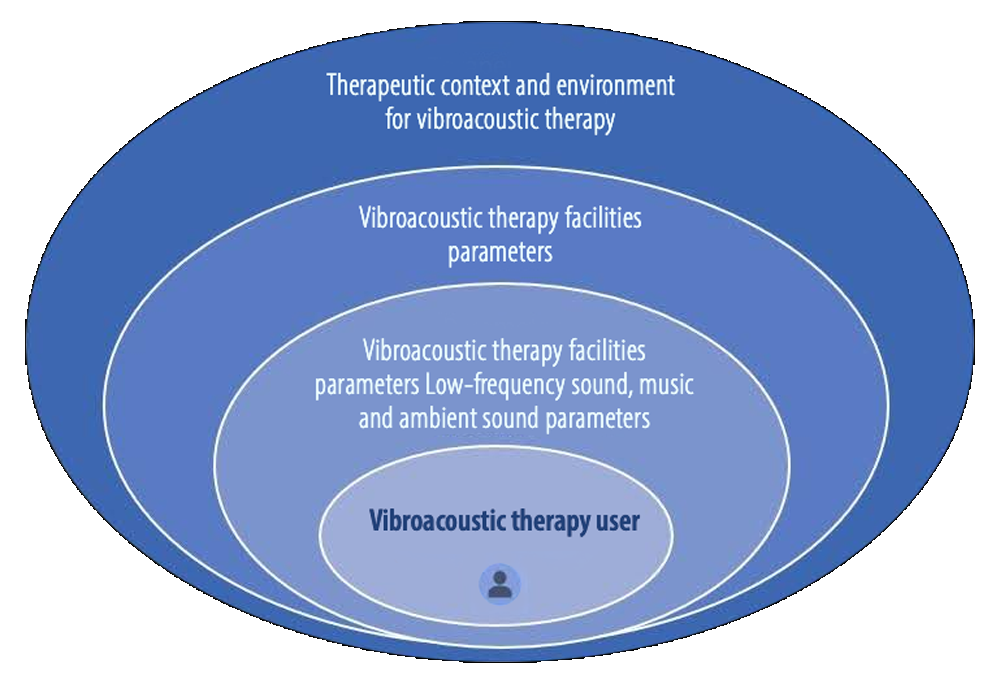
Theoretical framework encompassing a broader concept of vibroacoustic therapy elements and other factors (Figure 2):

  • Vibroacoustic therapy user,
  • low-frequency sound parameters, 
  • music / ambient sound,
  • vibroacoustic therapy device parameters,
  • therapeutic context,
  • environment for vibroacoustic therapy.


Vibroacoustic therapy user (or client, patient, etc.) – age, gender, health status, physiological characteristics (e.g. BMI or ANS reactivity), psychosocial factors (thought and behaviour patterns, traumatic experiences, etc.), individual preferences and needs, etc.


Basic vibroacoustic therapy variables


Low-frequency sound parameters – Key parameters of low-frequency sound include:

  • Vibration intensity (dB SPL) – affects the transmission of vibrations through the material the vibroacoustic therapy device is made of and thus their effect on the user's body tissues. Vibroacoustic therapy commonly uses sound pressure levels up to 80 dB SPL (decibel Sound Pressure Level, a unit of measurement of sound pressure level, expresses the intensity of sound in the environment), which is a level considered safe and sufficiently effective for vibroacoustic therapy, while also corresponding to intrauterine conditions of the human foetus (Punkanen and Ala-Ruona, 2012). However, the exact level may depend on the specific therapeutic setting and the type of vibroacoustic device used.
  • Frequency range – the most commonly used frequencies range from 30–120 Hz, with the optimal therapeutic frequencies depending on the indication (e.g. 40 Hz is most often used for stimulation of the parasympathetic nervous system) (Lehikoinen, 1998; Punkanen and Ala-Ruona, 2012).
  • Modulation characteristics of low-frequency sound (e.g. amplitude or frequency-band modulation).


Music/ambient sound (if included in vibroacoustic therapy) – with vibroacoustic therapy it is possible to apply music of various genres and styles, but also ambient sounds or white noise according to user preferences. Some authors also describe the use of separate low-frequency vibrations (Boyd-Brewer, 2004; Campbell et al., 2019). Three universal principles of sound and music (Wigram, 1997) were also important for the development of vibroacoustic therapy, which later became the basis for many research hypotheses:

  • high frequencies may increase tension, low frequencies may decrease it, 
  • Music without a distinct rhythm may have a calming effect, while rhythmic music may have stimulating effect (excitement), 
  • Loud music may incite aggressive behaviour, while calm music may have a sedative effect (Wigram and Dileo, 1997).


For the practical part of this doctoral thesis, descriptions of musical experiences on a physical and psychological level from more than nine hundred participants of research by Gabrielsson and Lindström, who collected them in the 1980s and 1990s, are essential:

  • Bodily reactions – chills in the back, goosebumps, rapid heartbeat, etc. 
  • Changes in perception – increased attention, in some cases associated synesthetic sensations. 
  • Cognitive reactions – recalling memories and images, associative processes, changes in the perception of time, space and one's own body.
  • Emotional reaction – in connection with a given musical experience.  
  • Existential aspects of the experience of music – reflections on lifestyle changes and relationships with others, religious and transpersonal experiences. 
  • A healing or therapeutic experience – changing the view of oneself, the world around us, or strengthening social bonds (Gabrielsson, Lindström, 2001).


Vibroacoustic therapy device parameters – Vibroacoustic therapy beds and chairs allow for full-body stimulation, localized vibration pads focus on stimulating a specific part of the body. Direct contact of skin with the vibrating surface ensures the best vibration absorption (Howard and Angus, 2009). Vibration equipment (chapter 1.2.1), similarly, resonant surfaces are not classified or standardized for research purposes (materials, dimensions, types of amplifiers and converters). Although the range and intensity of vibrations are key parameters in vibroacoustic therapy, in practice, mostly vibroacoustic devices with cushioned pads are used (comfortable for clients), which results in dampening the transmission to varying degrees and thus a variable effect of vibrations is achieved. In addition to the type of associated or built-in audio vibroacoustic therapy device (low-frequency sound generator or stereo amplifier), the resonant surface (material, thickness, width) is the key parameter, which transmits low-frequency sound and affects the transmission of vibrations between the speaker and the human body (see acoustic impedance below).


Therapeutic context:

  • Duration of therapy – the usual length of a vibroacoustic therapy intervention ranges between 30 and 60 minutes, with optimal therapeutic effects occurring in a series of 10–15 sessions (Skille, 1989).
  • Exposure time – short-term applications may induce acute relief, while long-term use has cumulative effects on regeneration (Punkanen and Ala-Ruona, 2012). With longer exposure times, some people may experience so-called low-frequency sound saturation and negative effects such as fatigue, headaches and nausea may occur (Skille, 1992). 
  • Frequency of vibroacoustic therapy applications – depending on the patient's individual needs, the therapy may be applied once or twice a week, however, in some cases (e.g. in the case of acute pain), it may be applied daily (Punkanen and Ala-Ruona, 2012).
  • Combination with other therapies – Vibroacoustic therapy is often combined with music therapy, physiotherapy or relaxation techniques, which may increase the effectiveness of the therapy (Wigram and Dileo, 1997).


The environment in which the therapy takes place – it should be a quiet environment with the possibility of regulating lighting and using blankets or pillows (Boyd-Brewer and McCaffrey, 2004). There are different environments for placing vibroacoustic therapy devices depending on the focus of the intervention (supportive, therapeutic, rehabilitation, relaxation) - therapeutic and multisensory rooms, relax zones, massage rooms, wellness environments, etc.


Safety and contraindications

Learning about possible contraindications to vibroacoustic therapy was an important part of the research and expanding therapeutic experience. Although vibroacoustic therapy is considered a safe and non-invasive method, various contraindications have been described in the literature, such as:

  • Cardiovascular diseases – patients with unstable hypertension or cardiac arrhythmias should only undergo this therapy under medical supervision (Boyd-Brewer and McCaffrey, 2004).
  • Epilepsy – some frequencies may trigger seizures in the case of patients with photosensitive epilepsy (Punkanen and Ala-Ruona, 2012).
  • Pregnancy – the safety of vibroacoustic therapy in pregnancy has not been sufficiently investigated, therefore caution is recommended (Lehikoinen, 1998).


According to other authors (Grocke and Wigram, 2006), vibroacoustic therapy is contraindicated in the following cases:

  • acute injuries or postoperative conditions,
  • people with pacemakers,
  • acute inflammatory diseases,
  • psychotic disorders,
  • hypotension (low blood pressure),
  • fear of vibrations or hypersensitivity to sound stimuli (Grocke a Wigram, 2006).


It is important to mention that none of the above cases are absolute contraindications which would necessarily be dangerous for the user. Rather, they are recommendations based on insufficiently researched effects of vibroacoustic therapy on certain risk conditions. 


VIBROBED – OUR TECHNOLOGICAL AND RESEARCH DEVELOPMENT


Development of Our Unique Vibroacoustic Composition and Unit 

The research studies which are the content of the doctoral thesis (Vilímek, 2025) were carried out on a prototype of a technological innovation for vibroacoustic therapy – the vibroacoustic relaxation bed called Vibrobed, while most of them applied specially created vibroacoustic therapy compositions for this research focused on stress management called Elements. How did these compositions and Vibrobed come about?     


Vibroacoustic Composition Elements 

Based on my own music therapy experiences, consultations with experts, principles of therapeutic use of musical instruments and musical elements, pilot tests with low-frequency sound and music recordings from different parts of the world (including sounds of nature), the need arose to carry out our own research in vibroacoustic therapy composition aimed at stress management. After considering several concepts and approaches, we chose the path of creating a vibroacoustic therapy composition in a professional recording studio, where a vibroacoustic bed was placed. This gave us direct feedback for determining optimal resonance transmissions for somatic listening and compatibility of low-frequency sounds and music.


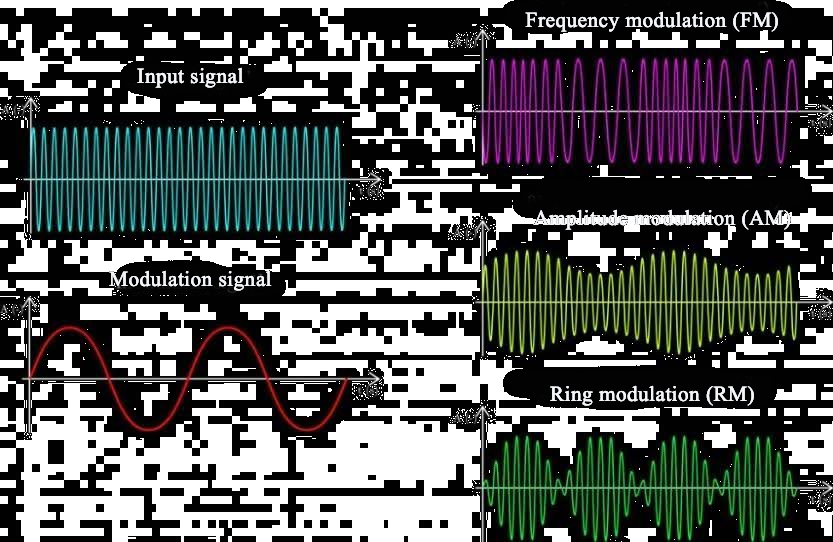
In the recording studio, low-frequency sound (LFS) materials were combined with original music based on the principles of receptive music therapy for relaxation music (resting heart rate 60-70 BPM, ambient character of the music, slow rhythm, simple harmonies) (Wigram, 1996). The low-frequency sound in this composition was created by a studio audio generator, as well as using electronic keyboards and a bass guitar with effects (compressor, equalizer, octave effect box to reduce the bass frequency). The sound was sequentially dosed, meaning that each NFZ stimulus was followed by a pause. In the composition, we used amplitude modulation (one pulsating frequency – gradually amplifying and weakening the signal creating pulse massage) and frequency/ring modulation (NFZ in the frequency range of 25 – 100 Hz transitioning from low frequencies to higher and vice versa at different rates). 


For the purpose of this research and approach, the concept of biorhythmic sequential dosing, which reflects alternating stimulation with low-frequency sound and a resting phase (pause) in certain rhythm so that this pulsation creates more natural structuring and conditions for somatic perception for the human organism. This is achieved by copying the human heartbeat in three phases (systole, diastole, rest) and breathing rhythm. A study by Mannes (2011) described that music may change heart rate and blood pressure in such a way that it synchronizes with the rhythm of music, regardless of genre (in Ala-Ruona, Punkanen, Campbell, 2015). A constant carrier signal, e.g. 40 Hz = 40 oscillations per second, is a very intense and unusual impulse for the body, not only from the point of view of somatic listening, but also of auditory perception (Figure 10). Based on empirical experience, Skille (1989) and Wigram (1996) described that prolonged stimulation through constant low-frequency oscillation may induce physiological irritation.


The principle of frequency, amplitude and ring modulation
(https://www.vovcr.cz/odz/tech/597/page13.html)


If we modulate the NZF so that the signal gradually increases and decreases (pulsates - the principle of amplitude modulation, also known as AM), we may reduce the influence of constant stimulation and expand vibroacoustic therapy stimulation by a variable element of pulsation – rhythmicity, and target the effect of a given frequency, e.g., on activation (faster pulsation) or relaxation (slower pulsation). As stated by Punkanen and Ala-Ruona (2012), low-frequency sinusoidal sound vibrations, which may be used for either relaxation or activation, constitute the basic element of vibroacoustic therapy. The main parameters which govern the intervention are the length of the sound pulse and the volume. Slow pulsations are used for relaxation and faster pulsations for activation. (Punkanen a Ala-Ruona, 2012). We consider the intensity (dB SPL) of the NFZ transmission to be as important a parameter of the vibroacoustic therapy input as the method of modulation of the low-frequency sound. The intensity parameter is rarely mentioned in studies, as are the modulation characteristics.


Frequency and ring modulation (hereinafter also FM and RM) is another modulation we used for research. It is based on the transition from a higher frequency to a lower one (sweep-down) or from a lower frequency to a higher (sweep-up), again in certain pulsation (at the time of the frequency band change). For example, a transition from 80 Hz to 30 Hz in 10 seconds causes a low-frequency sound transition (sweep), which the body perceives as a slow massage wave. We may target these frequency and ring modulations (as well as amplitude modulation) symmetrically - the change (signal modulation) occurs in the same way along the entire length of the body diagram or panoramically or alternately - gradually from head to toe and back. In the professional literature, similar procedures are often referred to as Frequency Sweeping, Frequency Scanning, Dynamic Frequency Modulation, Frequency Band Scanning, Glissando Effect. The term most commonly used in vibroacoustic therapy is scanning or frequency sweep. Skille and Wigram were the first to explore these modulation approaches (Skille, 1989; Wigram, 1996). In vibroacoustic therapy terminology, scanning is commonly used to describe sweep effects, however, there is a lack of evidence about their influence on the human body. The term scanning may be terminologically misleading; therefore, we use the established term frequency and ring modulation in this text (in the composition of Elements, the sweep up/down description is used). In principle, it is a change in frequency over time, typically in a rhythmic or cyclical pattern.


Few studies report detailed parameters of low-frequency sound, including the materials and technologies used (Kantor et al., 2022). However, these data are important for the reproducibility of studies, therefore, we describe the parameters of Elements in detail here.

Based on pilot research, the originally designed vibroacoustic therapy audio composition from 2019, which consisted of four main parts with a total duration of 20 minutes (4 x 5 minutes), was modified.


Element
Tempo
(BPM)
Tuning
(key)
Tuning
(Hz)
Frequency response and modulation
Description of the audio composition
Country65Fis4630-100 Hz (sweep up) / 100-30 Hz (sweep down)Audio generator for NFZ massage wave sweep up/down, panoramic effect (alternation of NFZ transmission from head to toe and back), 3-beat heartbeat simulation, studio digital NFZ simulations and effects. Musical instruments (analog sound): pow-wow drum, didgeridoo, keyboard.
Fire106A5525-55 Hz (sweep up) / 45 Hz - bass drumAudio generator for NFZ massage wave sweep up, studio digital NFZ simulations and effects. Musical instruments (analog sound): pow-wow drum, wave drum, percussion.
Water75A55Bass line range 25-80 HzBass line, subharmonic effects, studio digital NFZ simulation and water environment effects. Musical instruments (analog sound): electronic bass guitar, wave drum.
Airarrhythmic structureC3333 Hz Amplitude ModulationAudio generator for AM 33 Hz, studio digital NFZ simulations and effects. Musical instruments: keyboard, ambient sounds.

Original vibroacoustic therapy composition Elements (2019)


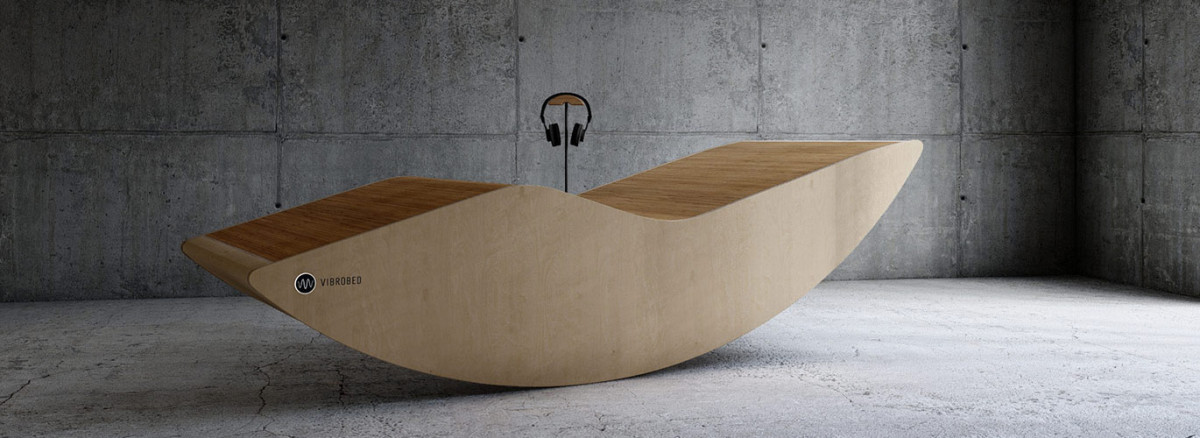
Vibroacoustic relaxation bed Vibrobed

In parallel with the development of the vibroacoustic therapy composition, a technical solution for research was also being developed – the vibroacoustic relaxation bed Vibrobed, the first prototype of which was manufactured in 2016 by the authors Zdeněk Vilímek and Petr Švarc. A version called Vibrobed 01 was created in 2018. It was intended for research purposes and later modified several times according to user preferences.

In the 2018 version, which was provided for all research studies listed below, an external amplifier of our own design with a power of 4x100W / 2 Ohmh was used with a built-in audio player module and NFZ generator with an amplitude-modulated sine signal. The output is fed into vibration exciters and headphones (without a modulated signal generator), potentiometers and an encoder were used for setting levels and controlling the generator and player. The amplifier with a player and NFZ generator allowed for the following variability of use for research purposes: 

  • NFZ generator – low-frequency sound in the range of 20-120Hz with the possibility of amplitude modulation. 
  • Amplifier and player – vibroacoustic therapy compositions or sounds of nature, possibility of parallel and synchronous playback with the NFZ generator. 
  • User settings – correction of the volume of transmission to the resonant membrane (4 body zones - calves, thighs, hips, shoulder blades) and to the headphones, the height of one frequency or frequency range, speed and direction of pulsation, length of intervention, etc.
Vibroacoustic relaxation bed Vibrobed 01 (2018)


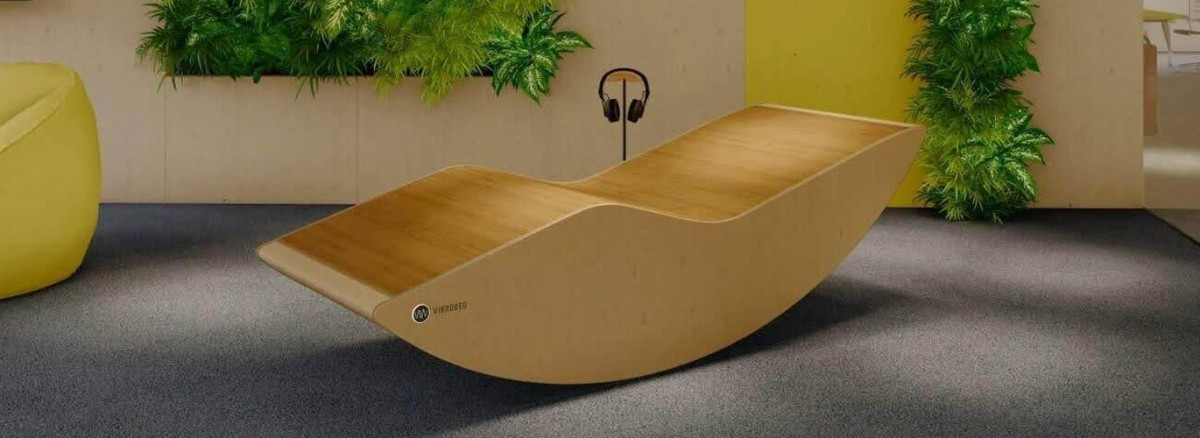
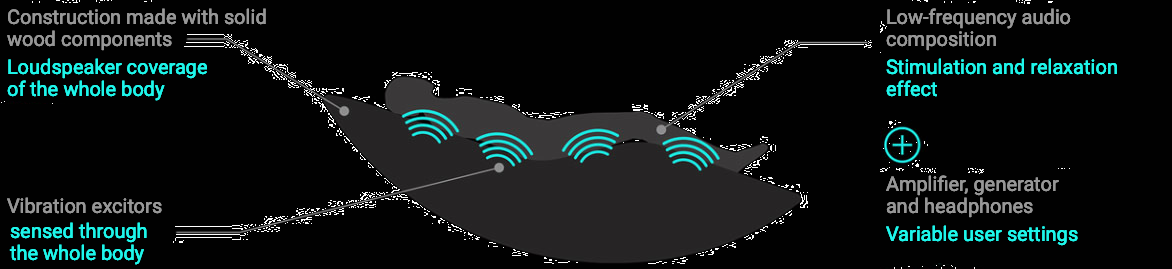
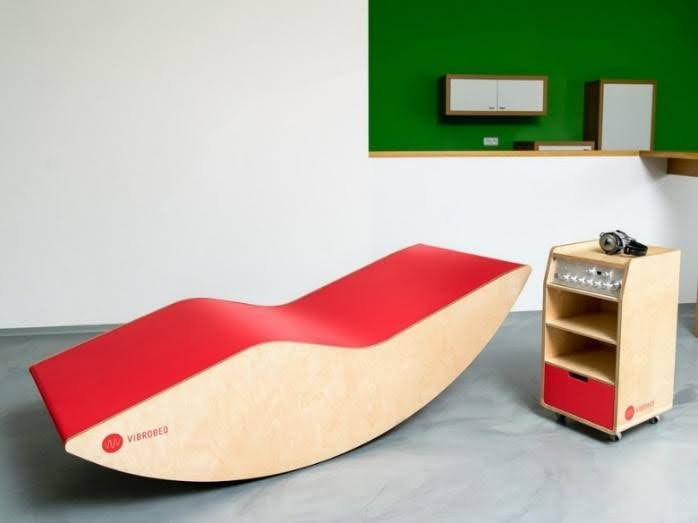
Next generation called Vibrobed 02 consists of an all-wooden structure with a modern sinusoidal design, low-frequency electrodynamic converters (exciters), an internal control module (integrated amplifier with a power of 250 W), a tablet with its own application Let´s Vibe and headphones with active noise cancellation.


Vibroacoustic relaxation bed Vibrobed 02 (2024)


By individually adjusting the type and intensity of vibrations, sound and musical stimuli are transmitted to the wooden resonant membrane and four body zones (calves, thighs, hips, shoulder blades) of the stimulated person, as well as to the ears through headphones.


Description of Vibrobed functions


Vibrobed has a valid Conformity Certificate No. 25TSU0039 and thus meets the essential safety requirements according to the following EU New Approach Directives in their current version: 

  • 2014/35/EU Low Voltage Directive
  • 2014/30/EU EMC Directive
  • Harmonised and other standards for conformity assessment (see the certificate).


Vibrobed uses modern exciter technology to convert an electrical signal into mechanical vibrations which may be transmitted to various surfaces and materials. Unlike traditional speakers, which require a sound box to propagate sound, exciter (or sound wave exciter) generates vibrations directly in the given material, which enables efficient transmission of sound and mechanical energy. It works on the principle of electromagnetic induction, similar to a conventional speaker, but instead of a traditional diaphragm, it uses a contact point which transmits vibrations to the surface on which the exciter is mounted.

The exciter structure consists of:

  • Coil: The electrical signal is fed into a coil that is placed in a magnetic field.
  • Permanent magnet: It creates a stable magnetic field which interacts with the coil.
  • Coupling pad: It transmits the generated vibrations to the underlying material.
  • Mounting plate: Allows the exciter to be mounted on various surfaces.


This mechanism allows for an even distribution of vibrations across the surface and creates a strong mechanical effect even at low frequencies. Traditional speakers have a diaphragm that may cause acoustic distortion at low frequencies. Exciters transmit vibrations directly into solid material, which ensures a cleaner transmission of low-frequency sounds and a deep effect on the human body - stimulation of soft tissues, muscles and nerve receptors. Better conduction of vibrations through solid body structures allows for more precise targeting of frequencies to specific areas. Every material has its own resonant frequency. For example, wood resonates approximately at 50–80 Hz, which is suitable for deep vibrations, therefore, we designed the Vibrobed as a large monolithic wooden speaker box of the size of an adult human body to achieve the most efficient transmission of vibrations without distortion. The special resonance membrane had been tested and optimized for 5 years (material composite, ribbing, mounting and layout of exciters) for the transfer of low-frequency sound into the body. We reduced the somatic sensitivity to low vibrations from approximately 30 Hz to 23 Hz. 


Vibrobed represents a modern and innovative approach to sound and vibration transmission, which is crucial especially for vibroacoustic therapy. The main advantages include:

  • Effective transmission of low-frequency vibrations into the human body controlled by an application on a tablet and an integrated amplifier directly in the bed.
  • Direct contact with resonance – precise and undistorted sound transmission to the wooden structure and resonant membrane.
  • Better vibration conduction through a solid structure. Wood resonates approximately at 50–80 Hz, which is suitable for deep vibrations. 
  • Optimization for research, relaxation and therapeutic use – e.g. the possibility of flexible research audio design, muscle relaxation, blood circulation stimulation and support of the autonomic nervous system.


Thanks to these properties Vibrobed is an effective tool for vibroacoustic therapy, wellness applications and innovative sound experiments. Due to the innovative solution of Vibrobed, which brings a modern solution to the interaction between the music you listen to and low-frequency sound (biorhythmic sequential dosing), the question arises as to whether and how the effect of stimulation on Vibrobed differs compared to other technologies for vibroacoustic therapy.


Recommendations for practice


Based on the results of the above research studies, the following practical recommendations for the use of vibroacoustic therapy in the area of stress prevention and mental health promotion (Vilímek, 2025) may be formulated: 

  • Vibroacoustic therapy as a means of parasympathetic activation. The significant increase in VSF shows that even a single exposure may lead to parasympathetic activation in healthy adults. Vibroacoustic therapy may therefore be a suitable tool for rapid regeneration during the day, whether in a school or healthcare environment.
  • Vibroacoustic therapy as a means of promoting physical relaxation. Participants' reflections confirm that vibrations combined with music help promote deeper somatic contact, imagination, and calming the mind. In the context of counselling, psychotherapy and other psychologically oriented interventions, vibroacoustic therapy may be used to support body-grounded experiencing (Gendlin, 1969) and emotional regulation.
  • The need to respect individual sensitivities and preferences. Analysis of subjective statements showed considerable diversity in the reactions and experience of the participants. In practice, it is necessary to adapt the vibroacoustic therapy application to the person's preferences, e.g. in terms of duration, frequency and volume.


The results show that vibroacoustic therapy leads to significant parasympathetic activation (increase in VSF). This intervention is perceived qualitatively differently compared to music without vibrations. On the contrary, no significant difference was demonstrated in salivary cortisol levels, galvanic skin response, or subjectively perceived stress. The results support its use in the areas of mental hygiene, stress prevention and therapeutic practice.

Vibroacoustic therapy is not just a therapeutic tool – it is a way to give the body space to calm down, orient itself, relax, regenerate and be able to trust not only the surroundings, but also itself again. Vibroacoustic therapy represents a promising bridge between science and humanity in the safe rhythm of sound vibrations.


LIST OF BIBLIOGRAPHICAL CITATIONS – Doctoral thesis (Vilímek, 2025)


Ahonen, H., Deek, P., & Kroeker, J. (2012). Low frequency sound treatment promoting physical and emotional relaxation: A qualitative study. International Journal of Psychosocial Rehabilitation, 17(1), 45–58.​


Ahonen-Eerikäinen, H. (1996). PAM – Psykoauditiivinen musiikkiterapiamenetelma. Musiikkiterapia, 1, 33-45.


Ala-Ruona, E. (2003). Fysioakustinen hoito osana erikoissairaanhoitoa ja kuntoutustutkimusta [The physioacoustic treatment as a part of specialized health care and rehabilitation assessment]. Muistoissa Petri Lehikoinen, 173-193.


Ala-Ruona, E., Punkanen, M., & Campbell, E. (2015). Vibroacoustic therapy: Conception, development, and future directions. Musiikkiterapia, 30(1-2), 48-71.


Ali, N., & Nater, U. M. (2020). Salivary alpha amylase as a biomarker of stress in behavioural medicine. International Journal of Behavioral Medicine, 27(3), 337–342. https://doi.org/10.1007/s12529-019-09843-x


Almeida, Q., King, L., & Ahonen-Eerikainen, H. (2007). Short-term Influences of the Physioacoustic Method on Symptoms in Parkinson's Disease. Neurorehabilitation and Neural Repair.


Almeida-Santos, M. A., Barreto-Filho, J. A., Oliveira, J. L. M., Reis, F. P., da Cunha Oliveira, C. C., & Sousa, A. C. S. (2016). Aging, heart rate variability and patterns of autonomic regulation of the heart. Archives of gerontology and geriatrics, 63, 1-8.


Annunziata, M. L., Scala, M., Giuliano, N., Tagliaferri, S., Imperato, O. C. M., Esposito, F. G., Campanile, M., & Di Lieto, A. (2012). Fetal Vibroacoustic Stimulation in Computerized Cardiotocographic Analysis: The Role of Short-Term Variability and Approximate Entropy. Journal of Pregnancy, 2012, 814987. https://doi.org/10.1155/2012/814987


Bailey, B., Gravel, J., & Daoust, R. (2012). Reliability of the visual analog scale in children with acute pain in the emergency department. PAIN®, 153(4), 839-842.


Bartel, L. R., Chen, R., Alain, C., & Ross, B. (2017). Vibroacoustic stimulation and brain oscillation: From basic research to clinical application. Music and Medicine, 9(3), 153-166.


Bartel, L., & Mosabbir, A. (2021). Possible mechanisms for the effects of sound vibration on human health. In Healthcare (Vol. 9, No. 5, p. 597). MDPI.


Benson, H. (1975). The Relaxation Response. William Morrow and Company.


Bergström-Isacsson, M., Lagerkvist, B., Holck, U., & Gold, C. (2014). Neurophysiological responses to music and vibroacoustic stimuli in Rett syndrome. Research in developmental disabilities35(6), 1281-1291.


Bilan, A., Witczak, A., Palusiński, R., Myśliński, W., & Hanzlik, J. (2005). Circadian rhythm of spectral indices of heart rate variability in healthy subjects. Journal of electrocardiology, 38(3), 239-243.


Blomqvist, M., Holmberg, K., Lindblad, F., Fernell, E., Ek, U., & Dahllöf, G. (2007). Salivary cortisol levels and dental anxiety in children with attention deficit hyperactivity disorder. European Journal of Oral Sciences, 115(1), 1-6.


Boucsein, W. (2012). Electrodermal activity. Springer Science & Business Media.


Boyd-Brewer, C., & McCaffrey, R. (2004). Vibroacoustic sound therapy improves pain management and more. Holistic Nursing Practice, 18(3), 111–118. https://doi.org/10.1097/00004650-200405000-00009


Brabant, O., van de Ree, M., & Erkkilä, J. (2017). The effect of resonance frequency breathing when used as a preparatory exercise in music psychotherapy: A single-case experimental study of a client with anxiety disorder. The Arts in Psychotherapy, 56, 7–18. https://doi.org/10.1016/j.aip.2017.08.004


Brabcová, D. B., & Kohout, J. (2018). PSYCHOMETRICKÉ OVĚŘENÍ ČESKÉ VERZE ŠKÁLY VNÍMANÉHO STRESU. E-psychologie, 12(1).


Braunlin, E. A., Harmatz, P. R., Scarpa, M., Furlanetto, B., Kampmann, C., Loehr, J. P., Ponder, K. P., Roberts, W. C., Rosenfeld, H. M., & Giugliani, R. (2011). Cardiac disease in patients with mucopolysaccharidosis: presentation, diagnosis and management. Journal of inherited metabolic disease, 34(6), 1183–1197.


Bressler, S. L. (1990). The gamma wave: A cortical information carrier? Trends in Neurosciences, 13(5)[143], 161–162. https://doi.org/10.1016/0166-2236(90)90039-D


Brown, C. J., Chen, A. C., & Dworkin, S. F. (1989). Music in the control of human pain. Music therapy, 8(1), 47-60.


Buchheit M. (2014). Monitoring training status with HR measures: do all roads lead to Rome?. Frontiers in physiology, 5, 73.


Campbell, E. A. (2019). Vibroacoustic treatment and self-care for managing the chronic pain experience: an operational model. JYU dissertations.


Campbell, E. A., Hynynen, J., & Ala-Ruona, E. (2017). Vibroacoustic treatment for chronic pain and mood disorders in a specialized healthcare setting. Music and Medicine, 9(3), 187-197​.


Campbell, E. A., Hynynen, J., Burger, B., & Ala-Ruona, E. (2019). Exploring the use of Vibroacoustic treatment for managing chronic pain and comorbid mood disorders: A mixed methods study. Nordic Journal of Music Therapy28(4), 291-314.


Campbell, E., Hynynen, J., Burger, B., Vainionpää, A., and Ala-Ruona, E. (2019). Vibroacoustic treatment to improve functioning and ability to work: A multidisciplinary approach to chronic pain rehabilitation. Disabil. Rehabil. 43, 2055–2070. doi: 10.1080/09638288.2019.1687763 


Campbell, E., Burger, B., & Ala-Ruona, E. (2019). A single-case, mixed methods study exploring the role of music listening in vibroacoustic treatment. In Voices: A World Forum for Music Therapy (Vol. 19, No. 2, pp. 27-27).


Cannon, W. B. (1932). The Wisdom of the Body. New York: W.W. Norton.


Carrington, M. J., Barbieri, R., Colrain, I. M., Crowley, K. E., Kim, Y., & Trinder, J. (2005). 

Changes in cardiovascular function during the sleep onset period in young adults. Journal of Applied Physiology, 98(2), 468-476.


Cohen, J. (1988). Statistical power analysis for the behavioral sciences (2nd ed.). Lawrence Erlbaum Associates.


Cohen, S., Janicki-Deverts, D., & Miller, G. E. (2007). Psychological stress and disease. JAMA, 298(14), 1685–1687. https://doi.org/10.1001/jama.298.14.1685


Cohen, S., Kamarck, T., & Mermelstein, R. (1983). A global measure of perceived stress. Journal of Health and Social Behavior, 24(4), 385–396. https://doi.org/10.2307/2136404


Corbett, B. A., Mendoza, S., Abdullah, M., Wegelin, J. A., & Levine, S. (2006). Cortisol circadian rhythms and response to stress in children with autism. Psychoneuroendocrinology, 31(1), 59–68. https://doi.org/10.1016/j.psyneuen.2005.05.011


Couper, M. P., Tourangeau, R., Conrad, F. G., & Singer, E. (2006). Evaluating the effectiveness of visual analog scales: A web experiment. Social Science Computer Review24(2), 227-245.


Craig, A. D. (2002). How do you feel? Interoception: The sense of the physiological condition of the body. Nature Reviews Neuroscience, 3(8), 655–666. https://doi.org/10.1038/nrn894


Critchley, H. D. (2002). Electrodermal responses: What happens in the brain. The Neuroscientist, 8(2), 132–142. https://doi.org/10.1177/107385840200800209 


Čadilová, V., & Žampachová, Z. (2012). Metodika práce se žákem s poruchami autistického spektra. Olomouc: Univerzita Palackého v Olomouci.


Delmastro, F., Di Martino, F., and Dolciotti, C. (2018). “Physiological impact of vibro-acoustic therapy on stress and emotions through wearable sensors,” in Proceedings of the 2018 IEEE international conference on pervasive computing and communications workshops (IEEE) (Athens: IEEE), 621–626. 


DeLongis, A., Coyne, J. C., Dakof, G., Folkman, S., & Lazarus, R. S. (1982). Relationship of daily hassles, uplifts, and major life events to health status. Health Psychology, 1(2), 119–136. https://doi.org/10.1037/0278-6133.1.2.119


Dickerson, S. S., & Kemeny, M. E. (2004). Acute stressors and cortisol responses: A theoretical integration and synthesis of laboratory research. Psychological Bulletin, 130(3), 355–391. https://doi.org/10.1037/0033-2909.130.3.355


Duck, F. A. (1990). Physical properties of tissues: A comprehensive reference book. Academic Press. 


Dudonienė, V., Budrienė, L., Aukštikalnis, T., Lendraitienė, E., Čerkauskas, J., & Raistenskis, J. (2016). Effect of vibroacoustic therapy on pain management in adolescents with low back pain.


Faul, F., Erdfelder, E., Lang, A. G., & Buchner, A. (2007). G*Power 3: a flexible statistical power analysis program for the social, behavioral, and biomedical sciences. Behavior Research Methods, 39, 175-191.


Fooks, C., & Niebuhr, O. (2024). Effects of Vibroacoustic Stimulation on Psychological, Physiological, and Cognitive Stress. Sensors, 24(18), 5924.


Friedlová, K. (2007). Bazální stimulace v základní ošetřovatelské péči. Grada Publishing as.


Fritz, C. O., Morris, P. E., & Richler, J. J. (2012). Effect size estimates: current use, calculations, and interpretation. Journal of experimental psychology: General141(1), 2.


Galambos, R., Makeig, S., & Talmachoff, P. J. (1981). A 40-Hz auditory potential recorded from the human scalp. Proceedings of the national academy of sciences78(4), 2643-2647.


Gąsior, J. S., Zamunér, A. R., Silva, L. E. V., Williams, C. A., Baranowski, R., Sacha, J., Machura, P., Kochman, W., & Werner, B. (2020). Heart Rate Variability in Children and Adolescents with Cerebral Palsy-A Systematic Literature Review. Journal of clinical medicine, 9(4), 1141.


Gendlin, E. T. (1969). Focusing. Psychotherapy: Theory, Research & Practice, 6(1), 4.


Ghasemi, A., & Zahediasl, S. (2012). Normality tests for statistical analysis: a guide for non-statisticians. International journal of endocrinology and metabolism, 10(2), 486–489.


Goetz, M., & Uhlíková, P. (2009). ADHD-porucha pozornosti s hyperaktivitou: příručka pro starostlivé rodiče a zodpovědné učitele. Galén.


Grassmann, M., Vlemincx, E., von Leupoldt, A., Mittelstädt, J. M., & Van den Bergh, O. (2016). Respiratory changes in response to cognitive load: a systematic review. Neural Plasticity, 2016, Article 8146809. https://doi.org/10.1155/2016/8146809


Grocke, D., & Wigram, T. (2006). Receptive methods in music therapy: Techniques and clinical applications for music therapy clinicians, educators and students. Jessica Kingsley Publishers​.


Haltia, M. (2003). The neuronal ceroid-lipofuscinoses. Journal of Neuropathology & Experimental Neurology, 62(1), 1–13. https://doi.org/10.1093/jnen/62.1.1ScienceDirect+2


Hartley, S. L., & MacLean, W. E. (2005). Perceptions of stress and coping strategies among adults with mild mental retardation: Insight into psychological distress. American Journal on Mental Retardation, 110(4), 285–297. https://doi.org/10.1352/0895-8017(2005)110[285:POSACS]2.0.CO;2


Hayes, M. H. S., & Patterson, D. G. (1921). Experimental development of the graphic rating method. Psychological Bulletin, 18(1), 98–99


Hellhammer, D. H., Wüst, S., & Kudielka, B. M. (2009). Salivary cortisol as a biomarker in stress research. Psychoneuroendocrinology, 34(2), 163–171. https://doi.org/10.1016/j.psyneuen.2008.10.026


Holmes, T. H., & Rahe, R. H. (1967). The Social Readjustment Rating Scale. Journal of Psychosomatic Research, 11(2), 213–218. https://doi.org/10.1016/0022-3999(67)90010-4


Hooper, J. (2001). Is vibroacoustic therapy music therapy? Music Therapy Perspectives, 19(1), 68–74.


Hooper, J., Wigram, T., Carson, D., & Lindsay, B. (2008). A review of the music and intellectual disability literature (1943–2006) part two—experimental writing. Music Therapy Perspectives26(2), 80-96.


Howard, D., & Angus, J. (2009). Acoustics and psychoacoustics. Routledge.


Hrdlička, M., & Komárek, V. (2004). Dětský autismus: přehled současných poznatků. Praha: Portál.​


Chesky, K. S., & Michel, D. E. (1996). The music vibration table: a possible innovative form of pain relief, especially for the performing artist. Medical Problems of Performing Artists, 11(1), 30-34.


Chesky, K., Rubin, B., & Frische, E. (1992). The Pain Relieving Effect of Music Vibration on Rheumatoid Arthitis Patients as Related to Just Music and Placebo. ISME conference, book of abstracts.


Chrousos, G. P. (2009). Stress and disorders of the stress system. Nature Reviews Endocrinology, 5(7), 374–381. https://doi.org/10.1038/nrendo.2009.106

Iob, E., & Steptoe, A. (2019). Cardiovascular disease and hair cortisol: a novel biomarker of chronic stress. Current Cardiology Reports, 21(10), 116. https://doi.org/10.1007/s11886-019-1208-7


Kanner, A. D., Coyne, J. C., Schaefer, C., & Lazarus, R. S. (1981). Comparison of two modes of stress measurement: Daily hassles and uplifts versus major life events. Journal of Behavioral Medicine, 4(1), 1–39. https://doi.org/10.1007/BF00844845


Kantor, J., Hlaváčková, L., Du, J., Dvořáková, P., Svobodova, Z., Karasová, K., & Kantorova, L. (2022). The effects of Ayres sensory integration and related sensory based interventions in children with cerebral palsy: a scoping review. Children9(4), 483.

Kantor, J., Campbell, E. A., Kantorová, L., Marečková, J., Regec, V., Karasová, K., ... & Klugar, M. (2022). Exploring vibroacoustic therapy in adults experiencing pain: a scoping review. BMJ open12(4), e046591.


Kantor, J. (2014). Kreativní přístupy v rehabilitaci osob s těžkým kombinovaným postižením: výzkumy, teorie a jejich využití v edukaci a terapiích. Univerzita Palackého v Olomouci.


Katmah, R., Al-Shargie, F., Tariq, U., Babiloni, F., Al-Mughairbi, F., & Al-Nashash, H. (2021). A review on mental stress assessment methods using EEG signals. Sensors, 21(15), 5043. https://doi.org/10.3390/s21155043


Katusic, A., Alimovic, S., & Duranovic, V. (2013). The effect of vibration therapy on spasticity and motor function in children with cerebral palsy: A randomized controlled trial. Neurorehabilitation, 32(1), 163-172. https://doi.org/10.3233/NRE-130817


Katušić, A., & Mejaški-Bošnjak, V. (2011). Effects of vibrotactile stimulation on the control of muscle tone and movement facilitation in children with cerebral injury. Collegium antropologicum, 35(1), 57-63.


Kędzierska, K., Synder, M., & Kozłowski, P. (2021). Influence of Vibroacoustic Therapy on Local Status and Rehabilitation of Post-TKR and Post-THR Patients. Ortopedia, Traumatologia, Rehabilitacja, 23(2), 101–113. https://doi.org/10.5604/01.3001.0014.8139


Khalfa, S., Peretz, I., Blondin, J.-P., & Manon, R. (2002). Event-related skin conductance responses to musical emotions in humans. Neuroscience Letters, 328(2), 145–149. https://doi.org/10.1016/S0304-3940(02)00462-7


Kim, H. G., Cheon, E. J., Bai, D. S., Lee, Y. H., & Koo, B. H. (2018). Stress and heart rate variability: A meta-analysis and review of the literature. Psychiatry Investigation, 15(3), 235–245. https://doi.org/10.30773/pi.2017.08.17


Kim, S. A., & LCAT, M. B. (2013). Stress reduction and wellness.


Kinsler, L. E., Frey, A. R., Coppens, A. B., & Sanders, J. V. (2000). Fundamentals of acoustics. John wiley & sons.


Kirschbaum, C., & Hellhammer, D. H. (1994). Salivary cortisol in psychoneuroendocrine research: Recent developments and applications. Psychoneuroendocrinology, 19(4), 313–333. https://doi.org/10.1016/0306-4530(94)90013-2


Koenig, J., & Thayer, J. F. (2016). Sex differences in healthy human heart rate variability: A meta-analysis. Neuroscience & Biobehavioral Reviews, 64, 288–310. https://doi.org/10.1016/j.neubiorev.2016.03.007


Koike, Y., Hoshitani, M., Tabata, Y., Seki, K., Nishimura, R., & Kano, Y. (2012). Effects of vibroacoustic therapy on elderly nursing home residents with depression. Journal of Physical therapy science, 24(3), 291-294.


Kraus, J. (2005). Dětská mozková obrna. Grada Publishing, as.

Kyriacou, C. (2001). Teacher stress: Directions for future research. Educational Review, 53(1), 27-35.


Lazarus, R. S., & Folkman, S. (1984). Stress, appraisal, and coping. New York: Springer Publishing Company.


Lehikoinen, P. (1998). The Physioacoustic Method. Acoustic Vibration in Medicine. Finnish Journal of Music Education3(3), 25-50.


Levenstein, S., Prantera, C., Varvo, V., Scribano, M. L., Berto, E., Luzi, C., & Andreoli, A. (1993). Development of the Perceived Stress Questionnaire: A new tool for psychosomatic research. Journal of Psychosomatic Research, 37(1), 19–32. https://doi.org/10.1016/0022-3999(93)90120-5


Liengme, B. & Hekman, K. (2020). Chapter 16 - Statistics for Experimenters. Liengme, B. & Hekman, K. (eds) Liengme's Guide to Excel® 2016 for Scientists and Engineers, Academic Press, pp. 371-396. 


Llinas, R., & Ribary, U. (1993). Coherent 40-Hz oscillation characterizes dream state in humans. Proceedings of the National Academy of Sciences, 90(5), 2078-2081.


Lovallo, W. R. (2015). Stress and health: Biological and psychological interactions. Sage publications.


Lovibond, P. F., & Lovibond, S. H. (1995). Depression anxiety and stress scales. Behaviour Research and Therapy.


Łukasiak A, Krystosiak M, Widłak P, Woldańska-Okońska M. (2013) Ocena skuteczności leczenia pacjentów z tzw. ostrogą piętową z zastosowaniem terapii wibroakustycznej. Ortop Traumatol Rehabil;15(1):77-87.


Lundqvist, L.-O., Andersson, G., & Viding, J. (2009). Effects of vibroacoustic music on challenging behaviors in individuals with autism and developmental disabilities. Research in Autism Spectrum Disorders, 3(2), 390-400. https://doi.org/10.1016/j.rasd.2008.08.005


Macartney, M. J., McLennan, P. L., & Peoples, G. E. (2021). Heart rate variability during cardiovascular reflex testing: the importance of underlying heart rate. Journal of Basic and Clinical Physiology and Pharmacology32(3), 145-153.


Maihoefner, C., Reulbach, U., Doerfler, A., Fasching, P., Renner, S., Münster, T., ... & Sperling, W. (2010). Infarction of primary sensorimotor cortex impairs pain perception. Cerebrovascular Diseases (Basel, Switzerland)30(2), 200-201.


Marshall, F. J., De Blieck, E. A., Mink, J. W., Kwon, J. M., & Augustine, E. F. (2005). Electrocardiographic and heart rate variability findings in juvenile neuronal ceroid lipofuscinosis. Pediatric Neurology, 33(3), 204–208. https://doi.org/10.1016/j.pediatrneurol.2005.03.015


McEwen, B. S. (2012). The brain on stress: How the social environment gets under the skin. Proceedings of the National Academy of Sciences, 109(Suppl. 2), 17180–17185. https://doi.org/10.1073/pnas.1121254109


McEwen, B. S. (2013). Allostasis and allostatic load: implications for neuropsychopharmacology. Stress and the Brain, 2-18.


McEwen, B. S., & Stellar, E. (1993). Stress and the individual: Mechanisms leading to disease. Archives of Internal Medicine, 153(18), 2093–2101.


Mole, S. E., & Cotman, S. L. (2015). Genetics of the neuronal ceroid lipofuscinoses (Batten disease). Biochimica et Biophysica Acta (BBA) - Molecular Basis of Disease, 1852(10 Pt B), 2237–2241. https://doi.org/10.1016/j.bbadis.2015.05.011


Moore, J., Farquharson, K., & Lotter, C. (2025, February). “Grooving in My Body”: A Mixed-Methods Pilot Study of Vibroacoustic Therapy’s Effects on Emotion Regulation and Attention in Autistic Children. In Healthcare (Vol. 13, No. 5, p. 465). MDPI.


Michalík, J., Baslerová, P., Felcmanová, L., & kol. (2015). Katalog podpůrných opatření: Dílčí část pro žáky s potřebou podpory ve vzdělávání z důvodu zdravotního nebo sociálního znevýhodnění. Univerzita Palackého v Olomouci. ISBN 978-80-244-4654-7. ​


Mind Garden. (n.d.). Perceived Stress Scale. Retrieved from https://www.mindgarden.com/documents/PerceivedStressScale.pdf


Nagai, N., Matsumoto, T., Kita, H., & Moritani, T. (2003). Autonomic nervous system activity and the state and development of obesity in Japanese school children. Obesity research, 11(1), 25-32.


Nepal, G. B., & Paudel, B. H. (2012). Effect of posture on heart rate variability in school children. Nepal Medical College journal : NMCJ, 14(4), 298–302.


Neuhaus, E., Bernier, R. A., & Beauchaine, T. P. (2016). Children with Autism Show Altered Autonomic Adaptation to Novel and Familiar Social Partners. Autism research : official journal of the International Society for Autism Research, 9(5), 579–591.


Neukirchen, T., Stork, M., Hoppe, M. W., & Vorstius, C. (2022). Spirometry has added value over electrodermal activity as a physiological marker of mental load in male subjects. Scientific Reports, 12(1), 4496. https://doi.org/10.1038/s41598-022-08480-x


Nosková, P. (2010). Chronická bolest, diagnostika, terapie. Interní medicína pro praxi, 12(4), 200–202. 


Nunan, D., Sandercock, G. R., & Brodie, D. A. (2010). A quantitative systematic review of normal values for short-term heart rate variability in healthy adults. Pacing and clinical electrophysiology, 33(11), 1407–1417.


Olsen, M. F., Bjerre, E., Hansen, M. D., Hilden, J., Landler, N. E., Tendal, B., & Hróbjartsson, A. (2017). Pain relief that matters to patients: systematic review of empirical studies assessing the minimum clinically important difference in acute pain. BMC medicine, 15, 1-18.


Parkitny, L., & McAuley, J. (2010). The Depression Anxiety Stress Scale (DASS). Journal of Physiotherapy, 56(3), 204. https://doi.org/10.1016/S1836-9553(10)70030-8


Parkes, J., Hill, N. A. N., Platt, M. J., & Donnelly, C. (2010). Oromotor dysfunction and communication impairments in children with cerebral palsy: a register study. Developmental Medicine & Child Neurology52(12), 1113-1119.


Patrick, G. (1999). The effects of vibroacoustic music on symptom reduction. IEEE engineering in medicine and biology magazine18(2), 97-100.


Patwardhan, A. R., Vallurupalli, S., Evans, J. M., Bruce, E. N., & Knapp, C. F. (1995). Override of spontaneous respiratory pattern generator reduces cardiovascular parasympathetic influence. Journal of applied physiology, 79(3), 1048–1054.


Pearlin, L. I. (1989). The sociological study of stress. Journal of Health and Social Behavior, 30(3), 241–256.


Pelletier, C. L. (2004). The effect of music on decreasing arousal due to stress: A meta-analysis. Journal of Music Therapy, 41(3), 192–214. https://doi.org/10.1093/jmt/41.3.192 


Penttilä, J., Helminen, A., Jartti, T., Kuusela, T., Huikuri, H. V., Tulppo, M. P., Coffeng, R., & Scheinin, H. (2001). Time domain, geometrical and frequency domain analysis of cardiac vagal outflow: effects of various respiratory patterns. Clinical physiology, 21(3), 365–376.


Porges, S. W. (2007). The polyvagal perspective. Biological psychology, 74(2), 116-143.


Tomaino, C. M. (2012). Using rhythmic auditory stimulation for rehabilitation. In Music, Science, and the Rhythmic Brain (pp. 111-121). Routledge.


Punkanen, M., & Ala-Ruona, E. (2012). Contemporary vibroacoustic therapy: Perspectives on clinical practice, research, and training. Music and Medicine, 4(3), 128-135.


Rajendra Acharya, U., Paul Joseph, K., Kannathal, N., Lim, C. M., & Suri, J. S. (2006). Heart rate variability: a review. Medical & biological engineering & computing, 44(12), 1031–1051.


Robe, A., Păsărelu, C. R., & Dobrean, A. (2021). Exploring autonomic regulation in children with ADHD with and without comorbid anxiety disorder through three systematic levels of cardiac vagal control analysis: Rest, reactivity, and recovery. Psychophysiology, 58(9), e13850.


Rogers, D. R. B., Ei, S., Rogers, K. R., & Cross, C. L. (2007). Evaluation of a multi-component approach to cognitive-behavioral therapy using guided visualizations, cranial electrotherapy stimulation, and vibroacoustic sound. Complementary Therapies in Clinical Practice, 13(2), 95–101. https://doi.org/10.1016/j.ctcp.2006.10.002


Rüütel, E. (2002). The psychophysiological effects of music and vibroacoustic stimulation. Nordic Journal of Music Therapy, 11(1), 16-26. https://doi.org/10.1080/08098130209478039


Saquetto, M., Carvalho, V., Silva, C., Conceição, C., & Gomes-Neto, M. (2015). The effects of whole body vibration on mobility and balance in children with cerebral palsy: a systematic review with meta-analysis. Journal of Musculoskeletal & Neuronal Interactions, 15(2), 137–144


Salleh, M. R. (2008). Life event, stress and illness. Malaysian Journal of Medical Sciences, 15(4), 9–18. PMID: 22589633


Sandler, H., Fendel, U., Buße, P., Rose, M., Bösel, R., & Klapp, B. F. (2017). Relaxation – Induced by Vibroacoustic Stimulation via a Body Monochord and via Relaxation Music – Is Associated with a Decrease in Tonic Electrodermal Activity and an Increase of the Salivary Cortisol Level in Patients with Psychosomatic Disorders. PLOS ONE, 12(1), e0170411. https://doi.org/10.1371/journal.pone.0170411


Sapolsky, R. M. (2004). Why zebras don’t get ulcers: The acclaimed guide to stress, stress-related diseases, and coping. Holt Paperbacks.


Selye, H. (1956). The Stress of Life. New York: McGraw-HillBook Co. Inc USA.


Selye, H. (1974). Stress without distress. In Psychopathology of human adaptation (pp. 137-146). Boston, MA: Springer US.


Shaffer, F., & Ginsberg, J. P. (2017). An overview of heart rate variability metrics and norms. Frontiers in Public Health, 5, 258. https://doi.org/10.3389/fpubh.2017.00258


Skille, O. (1989). VibroAcoustic Therapy. Music Therapy, 8(1), 61–77.
Dostupné online: https://academic.oup.com/musictherapy/article-pdf/8/1/61/8739474/8-1-61.pdf 


Skille, O. (1991). Manual of Vibroacoustic Therapy. Levanger, Norway: ISVA Publications.


Skille, O. (1992). Vibroacoustic research 1980-1991. In R. Spintge, R. Dron (Eds.). Music and Medicine. St Louis, MO: MMB Music, Inc. Tiidus, P.M., Markoulakis, R., Murray, D., Bryden, P.J.


Skille, O. (1995). The Effect of Music, Vocalisation and Vibration on Brain and Muscle Tissue: Studies in Vibroacoustic Therapy. Teoksessa: Wigram, T., Saperston, B. & West, R.(Edit.) The Art and Science of Music Therapy: A Handbook.


Skille, O., Wigram, T., & Weekes, L. (1989). Vibroacoustic therapy: The therapeutic effect of low frequency sound on specific physical disorders and disabilities. Journal of British Music Therapy3(2), 6-10.


Smolík, P. (2002). Duševní a behaviorální poruchy: průvodce klasifikací, nástin nozologie, diagnostika. Maxdorf.


Thayer, J. F., Åhs, F., Fredrikson, M., Sollers, J. J., & Wager, T. D. (2012). A meta-analysis of heart rate variability and neuroimaging studies: implications for heart rate variability as a marker of stress and health. Neuroscience & Biobehavioral Reviews, 36(2), 747–756. https://doi.org/10.1016/j.neubiorev.2011.11.009


Thoits, P. A. (2010). Stress and health: Major findings and policy implications. Journal of Health and Social Behavior, 51(1_suppl), S41–S53.


Tomaino, C. M. (2012). Using rhythmic auditory stimulation for rehabilitation. In Music, Science, and the Rhythmic Brain (pp. 111-121). 


Valenta, M., Müller, O., & Vítková, M. (2013). Metodika práce se žákem s mentálním postižením. Univerzita Palackého v Olomouci. 


Veternik, M . , Misek, J., Jakus, J., Tonhajzerova, I., Jakusova, V., Hudečkova, H. (2018). The impact of sound exposure on heart rate variability in adolescent students. Physiological Research, 67, 695 - 702 DOI:10.33549/physiolres.933882


Vilímek, Z., a Chráska, M. (2019). Vliv vibroakustické stimulace na subjektivní vnímání. In Tělo a mysl. Sborník odborných příspěvků (s. 340–349). Olomouc: Univerzita Palackého v Olomouci.


Vilímek, Z., Kantor, J., a Chráska, M. (2019). Vliv vibroakustické stimulace na autonomní nervový systém. In Tělo a mysl. Sborník odborných příspěvků (s. 332–339). Olomouc: Univerzita Palackého v Olomouci.


Vilímek, Z., Kantor, J., Krejčí, J., Janečka, Z., Jedličková, Z., Nekardová, A., Botek, M., Bucharová, M., a Campbell, E. A. (2022). The effect of low frequency sound on heart rate variability and subjective perception: A randomized crossover study. Healthcare, 10, 1024. https://doi.org/10.3390/healthcare10061024


Vilímek, Z., Kořínková, J., a Kantor, J. (2021). The impact of vibroacoustic therapy on subjective perception of university students – Mixed design pilot study. Universal Journal of Educational Research, 9(7), 1409–1420. https://doi.org/10.13189/ujer.2021.090707


Vilímek, Z., Uhrinová, Z., Bucharová, M., Kantor, J., a Krejčí, J. (2023). Wirkung der vibroakustischen Therapie auf Spastik und Herzfrequenzvariabilität bei zwei jungen Erwachsenen mit Zerebralparese. časopis REHABILITÁCIA, 60(3), 1-15. https://doi.org/10.61983/lcrh.v60i3.11 


Vítková, M. (2008). Speciální pedagogika. In S. Fischer & J. Škoda (Eds.), Speciální pedagogika (s. 5–10). Triton. ​https://knihovna.zcu.cz


Walters, C.L. (1996). The psychological and physiological effects of vibrotactile stimulation, via a Somatron, on patients awaiting scheduled gynecological surgery. Journal of Music Therapy, 33(4):261-287.


Warth, M., Kessler, J., Kotz, S., Hillecke, T. K., & Bardenheuer, H. J. (2015). Effects of vibroacoustic stimulation in music therapy for palliative care patients: A feasibility study. BMC Complementary and Alternative Medicine, 15, 436. https://doi.org/10.1186/s12906-015-0933-8


Wewers, M. E., & Lowe, N. K. (1990). A critical review of visual analogue scales in the measurement of clinical phenomena. Research in Nursing & Health, 13(4), 227–236. https://doi.org/10.1002/nur.4770130405


Wigram, T. (1995). The psychological and physiological effects of low frequency sound and music. Music Therapy Perspectives, 13(1), 16-23.


Wigram, A. L. (1996). The effects of vibroacoustic therapy on clinical and non-clinical populations (Doctoral dissertation, University of London).


Wigram, T. (1997). The Effect of Amplitude Modulation of the Pulsed Sinusoidal Low Frequency Tone as a Stimulus in Vibroacoustic Therapy. In T. Wigram, & C. Dileo. Music Vibration and Health (pp. 133-142). Jeffrey Books.


Wigram, T. (1997). The effect of vibroacoustic therapy compared with music and movement based physiotherapy on multiply handicapped patients with high muscle tone and spasticity. Music Vibration and Health. Cherry Hill, NJ: Jeffrey Books6985.


Wigram, T. (1997). The effect of VA therapy on multiply handicapped adults with high muscle tone and spasticity. In Music, Vibration and Health (p. 11).


Wigram, T., & Dileo, C. (1997). Music, vibration, and health. Cherry Hill, NJ: Jeffrey Books.

Wilder, J. (1967). Stimulus and response: The law of initial value. International Journal of Psychosomatics, 14(1), 11–20.


Young, F. L., & Leicht, A. S. (2011). Short-term stability of resting heart rate variability: influence of position and gender. Applied physiology, nutrition, and metabolism = Physiologie appliquee, nutrition et metabolisme, 36(2), 210–218.


Zafeiriou, D. I., & Batzios, S. P. (2013). Brain and spinal MR imaging findings in mucopolysaccharidoses: a review. AJNR. American journal of neuroradiology, 34(1), 5–13.

Zeidner, M. (2005). Test anxiety: The state of the art. Springer.